At the 2025 Copay, Reimbursement, and Access Congress, Carl Schmid provides a policy update on copay accumulators, maximizers. and alternative funding programs.
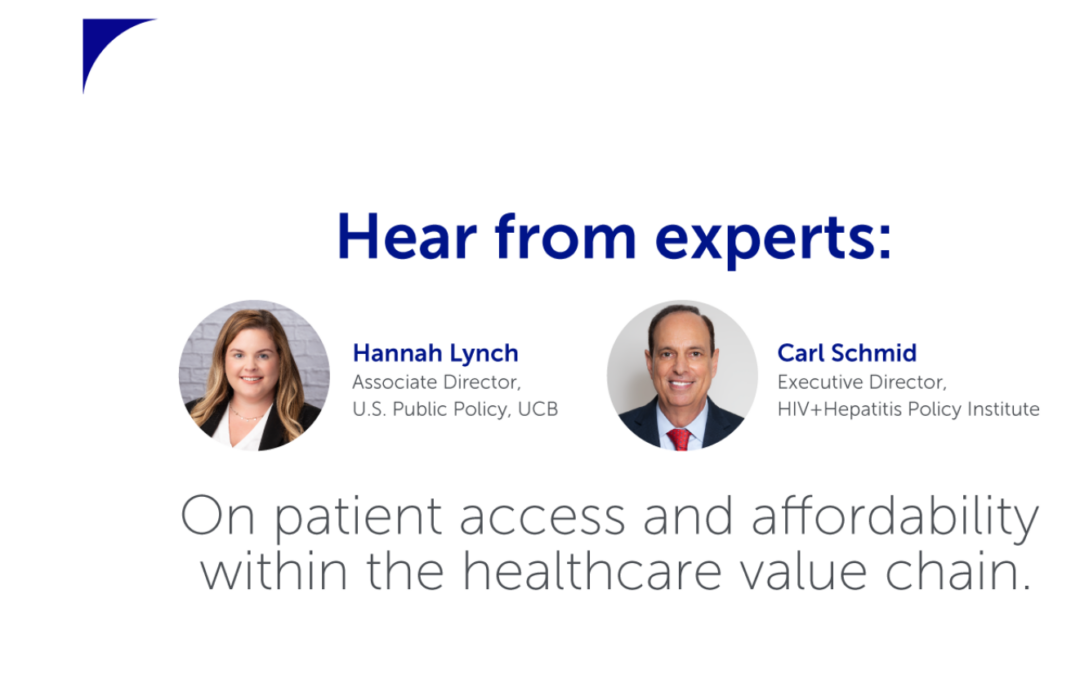
Carl Schmid, Executive Director, HIV+Hepatitis Policy Institute, Washington, D.C., spoke about copay accumulator programs and why they must stop. He sat down with Managed Healthcare Executive afterward and explained how HIV medications are involved and why cost sharing is supposed to be free for specific forms of PrEP – but isn’t. “We’re still finding that, despite the ACA requirements that preventive drugs such as PrEP should be free, both for drugs and for the ancillary services, around one-third of all people are being charged and cost sharing and it’s a real deterrent to people,” Schmid said in an interview with Managed Healthcare Executive. “One of the problems is that the providers don’t know the billing codes, and then [insurance companies] just deny.”
Schemes like refusing to count copay assistance toward patient out-of-pocket costs and designating some medications as “non-essential health benefits” allow PBMs and their insurance partners and others to make more money and profit at the expense of patients who are having trouble affording their drugs. We urge you the Federal Trade Commission to continue your investigation and take appropriate action to stop them.
Speaking at InformaConnect’s #Copay2024, Kevin Herwig gave a policy update on developments related to copay accumulators, maximizers, and alternative funding programs and the failure of HHS to enforce the HIV+Hepatitis Policy Institute’s Court victory a year ago or fully close the loophole allowing insurers to designate prescription drugs as non-essential health benefits.
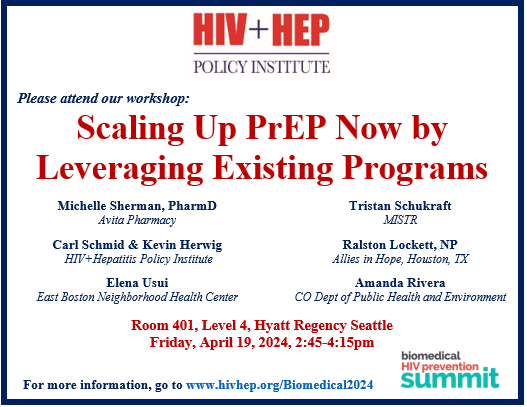
HIV+Hepatitis Policy Institute will convene a panel on Friday, April 19, 2024, at the Biomedical HIV Prevention Summit to examine how PrEP is provided today by entities including community health centers, CBOs, pharmacies, telemedicine platforms, and state health departments. We will examine how this work is financed by leveraging existing programs and systems, as well as current barriers and what can be done to close PrEP access gaps in underserved populations.